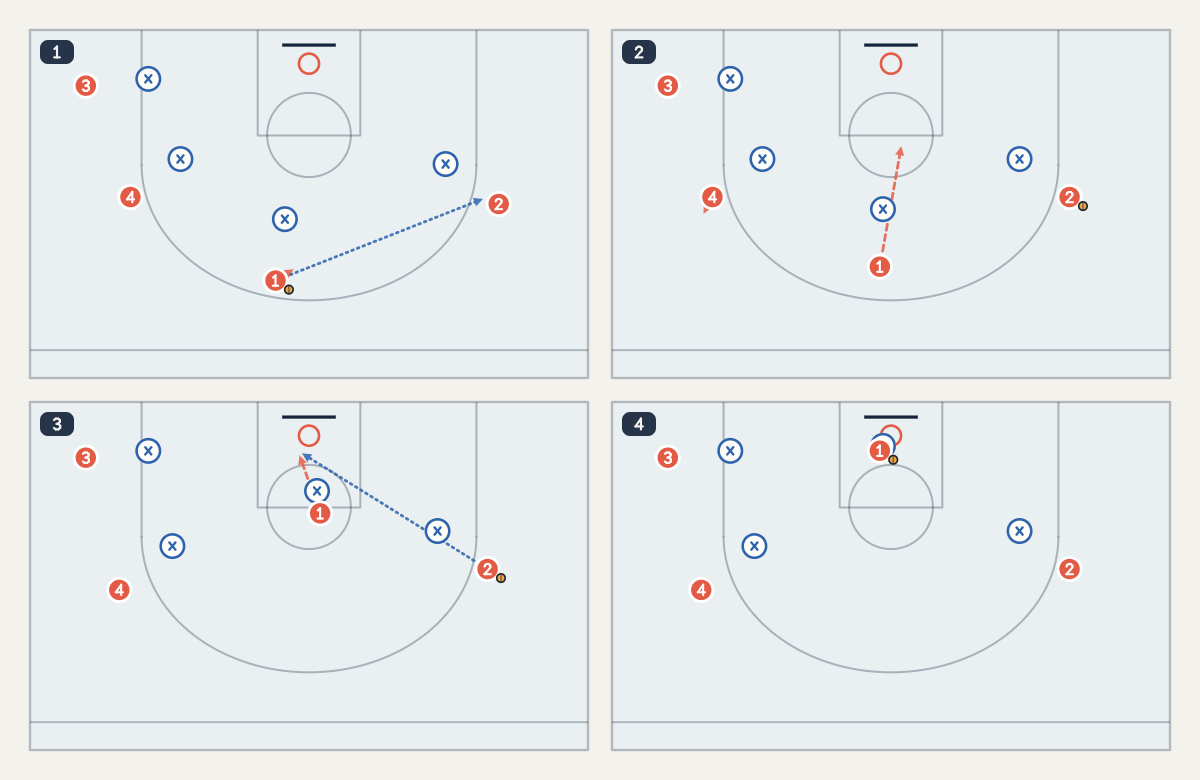
傳球後立刻從防守人背後切向籃筐,接隊友回傳完成終結。 · Pass, cut immediately behind the defender, and receive the return pass at the rim.
也叫傳切配合 · 傳球空切 · give and go · pass and cut · give-n-go
難度 · Difficulty
1/5
適用人數 · Formats
3v3 · 4v4 · 5v5
連續分步動畫 · Continuous step animation
先看整體,再逐步拆解 · See the whole action, then inspect each step
1234××××
1/4持球人與接應者建立傳球線 · Create a passing lane
靜態戰術圖 · Static play diagram
傳切戰術圖:四步跑位一圖看完 · Give & Go diagram: all four steps on one board
按 4v4 站位繪製,與上方動畫的默認人數一致。長按或右鍵即可保存,帶到球場上講。 · Drawn at 4v4, the same format the animation above opens on. Save it and bring it to the court.
1進攻球員,按 1 到 4 號編號 · Offense, numbered 1 to 4
×防守球員 · Defenders
跑動或運球路線 · Cut or drive
傳球路線 · Pass
掩護,短橫是掩護面 · Screen, the bar is the screener’s face
跑法總覽 · Action overview
先看傳切如何完整運轉 · See how the Give & Go flows end to end
持球人將球傳給側翼隊友後立即變速,從自己防守者的身後直切籃筐,接側翼的回傳完成上籃。關鍵在傳球出手的瞬間就啟動切入,利用防守者轉頭看球的一刻。 · The passer feeds the wing and immediately cuts hard to the basket behind their own defender, receiving the return pass for the layup. The cut must start the instant the pass leaves the hands, attacking the moment the defender turns to watch the ball.
傳切要解決什麼問題? · What problem does the Give & Go solve?
利用防守人的看球瞬間,在不運球的情況下製造籃下機會。 · Score at the rim without a dribble, in the moment the defender turns to watch the ball.
四步跑法 · Four-step walkthrough
怎麼跑傳切? · How do you run the Give & Go?
1
持球人與接應者建立傳球線 · Create a passing lane
2
傳球並觀察防守視線 · Pass and read the defender’s eyes
3
變速從防守背後切入 · Change pace and cut behind
4
回傳到切入者前方 · Lead the cutter with the return pass
教練口令 · Coaching cues
跑傳切時隊友只需要記住什麼? · What should players remember in the Give & Go?
傳完別站著 · Never stand still after passing
從防守後腦方向切 · Cut behind the defender's head
回傳要領先 · Lead the return pass
執行細節 · Execution details
傳切最容易跑錯在哪裡? · Where does the Give & Go usually break down?
傳球後停在原地,沒有立即切向籃筐 · Standing after the pass instead of cutting hard
回傳落在切入者身後,迫使其減速 · Throwing the return pass behind the cutter
訓練方法 · Practice method
訓練中怎麼練熟傳切? · How should a team practice the Give & Go?
無防守傳切熱身後進入 2v2,要求傳球後必須完成一次籃下切入。 · Progress from unguarded give-and-go reps to 2v2 with a mandatory basket cut.
人數變形 · Format variations
傳切在 3v3、4v4、5v5 怎麼調整? · How does the Give & Go change in 3v3, 4v4 and 5v5?
3v3
傳球直切 · Pass and direct basket cut
4v4
傳切 + 弱側交換 · Give-and-go + weak-side exchange
5v5
傳切 + 底線清空 · Give-and-go + baseline clear-out
4v4 備戰變化 · 4v4 variations for game prep
傳切 + 弱側交換Give-and-go with exchange
切入的同時弱側兩人交換位置,帶走協防的視線和站位。 · As the cutter goes, the two weak-side players exchange spots to occupy the help.
假切反跑Fake cut backdoor
切入者先向球假跑兩步,再突然反方向走後門。 · The cutter fakes toward the ball for two steps, then breaks backdoor.
防守怎麼守 · How it is guarded
怎麼防守傳切? · How do you defend the Give & Go?
每一種守法都要放棄一點東西,問題只是放棄哪一點。下面是常見的幾種,以及它們各自留下的口子。 · Every coverage gives something up; the only question is what. These are the common ones and the opening each of them leaves.
跳向球線 · Jump to the ball
傳球出手的同時,防守者往球的方向退一步,用身體擋在傳球人和籃筐之間。這是全世界青訓教的第一條無球防守原則。 · As the pass leaves, the defender takes a step toward the ball and puts their body between the passer and the basket. It is the first off-ball rule taught anywhere.
進攻怎麼打: · What beats it: 退這一步的人就離開了原來的位置。切不進去不要停,直接穿到弱側底角把空間讓出來,讓球轉移到另一側重新開始。 · The defender who takes that step has left their spot. If the cut is covered, do not stall: clear through to the weak-side corner, hand the space back, and reverse the ball.
貼防傳球路線 · Deny the return
防守者不守切入路線,而是伸手擋住回傳的角度,讓球根本傳不進去。 · The defender ignores the cutting lane and takes away the angle of the return pass instead, so the ball simply cannot get in.
進攻怎麼打: · What beats it: 貼得越緊,反跑越好用。切入者不要沿直線走,先往球的方向假跑兩步再突然改向籃下。 · The tighter the deny, the better the backdoor. The cutter fakes two steps toward the ball before breaking the other way.
協防封住切入 · Help tags the cutter
弱側的防守者離開自己的人,提前站到禁區裡等切入者。 · A weak-side defender leaves their own man early and meets the cutter in the lane.
進攻怎麼打: · What beats it: 他離開的那個人就是空位。切入者穿過禁區的同時,持球人不看籃下,直接把球甩到弱側。 · The player they left is open. While the cutter clears the lane, the passer looks away from the rim and skips it weak side.
容易混淆的動作 · Often confused with
傳切和哪些動作容易混? · What is the Give & Go often confused with?
下面這些動作和它長得像,但解決的問題不同。每一條只說那個決定性的區別。 · These look like it and solve a different problem. Each entry names the one difference that decides which is which.
切的人不是同一個。傳切裡切的是剛把球傳出去的人,這是持球人自己的動作,練的是他一個人的習慣;反跑裡切的通常是一個還沒碰過球的人,要有人先看見他的防守者貼上來,還要有人把那條路線讓開。所以傳切靠個人紀律,反跑靠全隊的眼睛。 · A different player cuts. In a give and go it is the passer, so it is the ball-handler's own action and it lives or dies on one person's discipline. In a backdoor it is usually somebody who has not touched the ball, which means a teammate has to see the overplay and somebody has to clear the lane for it. One is personal discipline; the other is five people looking.
先學哪一個是有順序的。傳切只需要兩個人和一個習慣,任何年齡的隊伍第一堂課就能練;UCLA 切入要求肘區那個人會做合法的背掩護,還要求切入者讀得懂防守從掩護哪一側過。把傳切練成本能之後再加掩護,這個動作才立得住。 · There is an order to learning them. A give and go needs two players and one habit, and can be taught in a first session at any age. A UCLA cut needs somebody at the elbow who can set a legal back screen and a cutter who can read which side the defender takes it on. The screen is worth adding once the pass-and-cut habit is automatic, and not before.